
The HDI Center for Assistive Technology Services (CATS) is Kentucky’s regional Assistive Technology Resource Center, providing free demonstrations, device loans, training, and expert guidance to help individuals with disabilities access the tools they need to live more independently. Serving Lexington and the surrounding Bluegrass region, HDI CATS operates under the federal Assistive Technology Act of 1998 to ensure that people with physical disabilities, their families, and the professionals who support them can explore assistive technology options without financial barriers or guesswork.
For someone navigating limb loss or other physical challenges, finding the right assistive device can feel overwhelming. HDI CATS removes that burden by offering hands-on demonstrations across multiple categories of assistive technology, from mobility aids and communication devices to tools for daily living and environmental controls. Their lending library allows you to take devices home and test them in real-world settings before making a purchase decision, a critical step that prevents costly mistakes and ensures the technology truly fits your lifestyle.
Beyond individual support, HDI CATS trains healthcare professionals, educators, community organizations, and students on assistive technology implementation and relevant legislation like the Americans with Disabilities Act. This commitment to education builds a more knowledgeable support network across the region, benefiting everyone who relies on assistive technology to participate fully in work, school, and community life.
Located at 2358 Nicholasville Road, Suite 180, in Lexington, Kentucky, HDI CATS serves as a hands-on resource hub where you can see, touch, and trial equipment in a supportive environment. Whether you’re exploring options for yourself or seeking guidance for someone you care for, the center’s experienced staff can help you identify solutions tailored to specific needs and goals.
What HDI CATS Provides
HDI CATS delivers a full spectrum of assistive technology services authorized under the AT Act of 1998, as amended. The center operates with a dual mandate: it provides statewide activities across Kentucky while maintaining a concentrated regional presence serving Lexington and region through its Bluegrass-focused programs.
This structure allows HDI CATS to offer both broad educational initiatives and hands-on support. Statewide, the center develops training programs and resources that reach professionals, educators, and disability advocates across Kentucky. At the regional level, it runs device demonstration labs, maintains a lending library of assistive equipment, and provides direct consultation to individuals and families exploring AT solutions.
The comprehensive approach means someone in Lexington can walk into the center to trial a mobility device, while a school district elsewhere in the state can access online training about implementing assistive technology in classrooms. By balancing these two scopes, HDI CATS meets both immediate local needs and broader systemic goals, ensuring assistive technology knowledge and access extend throughout Kentucky’s disability community.
Core Programs and Resources
Device Demonstrations and Loans
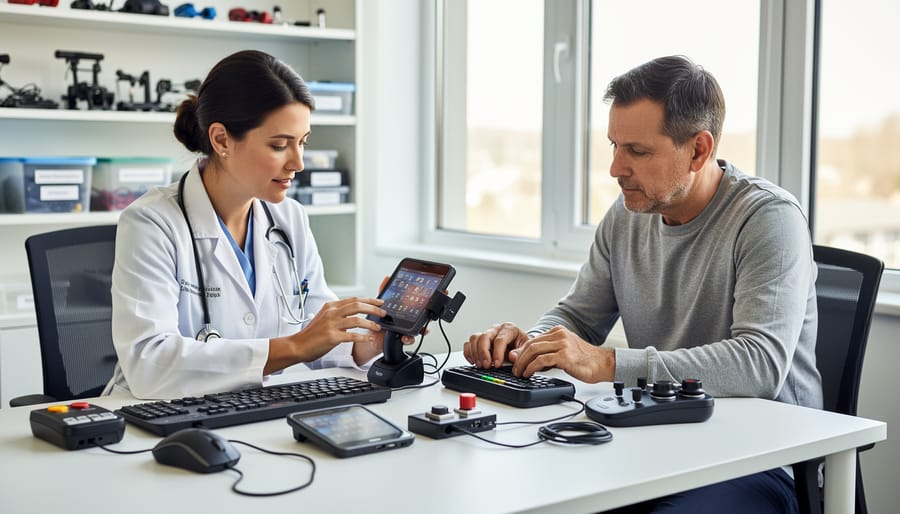
HDI CATS removes the guesswork from assistive technology decisions through device demonstrations and lending that put tools directly into the hands of individuals and families. Rather than relying on product descriptions or second-hand reviews, users can test equipment in real-world settings before committing to a purchase, a practical approach that helps people find what truly works for their specific needs and daily routines.
The lending library offers access to a range of assistive devices across multiple categories, from communication aids to mobility supports and home accessibility tools. Families in the Bluegrass region can check out devices for trial periods, allowing time to evaluate comfort, functionality, and compatibility with existing routines. This trial-before-purchase model is especially valuable when considering higher-cost equipment, where an informed decision can prevent expensive mistakes and ensure the chosen device actually enhances independence rather than gathering dust in a closet.
Demonstrations extend beyond the lending library, with HDI CATS staff showcasing how different technologies work and what trade-offs each option presents. These hands-on sessions help users understand not just what a device does, but whether it fits their lifestyle, physical abilities, and long-term goals, turning abstract product features into tangible, lived experience.
Training for Professionals, Communities, and Students
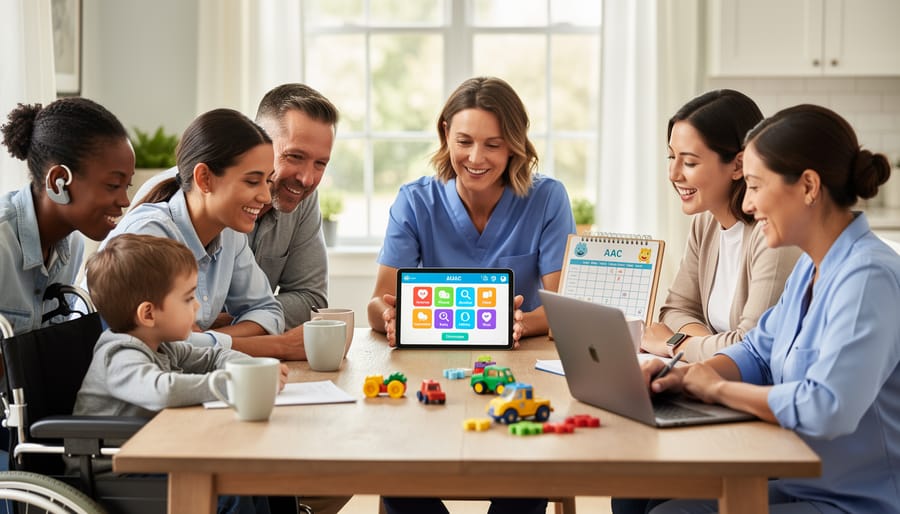
HDI CATS runs training on assistive tech for three distinct groups: working professionals in rehabilitation, education, and healthcare; community organizations serving people with disabilities; and students preparing for careers in disability services. These sessions build practical knowledge around selecting, implementing, and supporting assistive technology in real-world settings.
The professional training covers device categories, assessment strategies, and funding pathways. Participants learn how to match AT solutions to individual needs rather than defaulting to the most popular or expensive options. Community workshops focus on accessibility basics and the Americans with Disabilities Act, helping organizations understand their obligations and the role AT plays in meeting them. Student programs introduce emerging practitioners to the assistive technology field early, bridging classroom theory with hands-on exposure.
Training formats vary, some sessions happen at the Lexington center, others travel to regional locations, and certain modules adapt to virtual delivery. Topics shift based on current needs and new technology releases, so the curriculum stays relevant rather than repeating the same generic overview year after year.
This educational work extends HDI CATS’s impact beyond individual device loans. When professionals, organizations, and future practitioners understand assistive technology deeply, more people with disabilities benefit from informed recommendations and supportive environments across Kentucky.
Lending Library Access
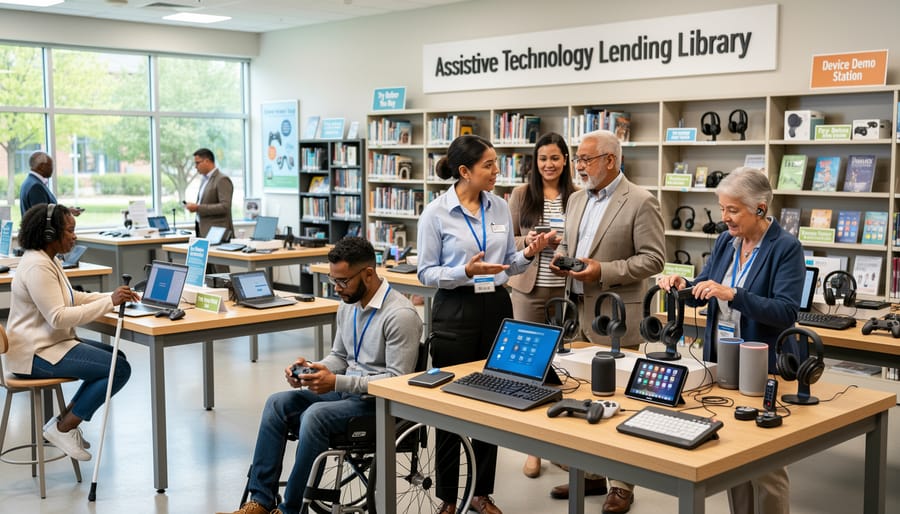
The lending library at HDI CATS operates on a simple premise: try before you buy. Individuals and families can check out assistive devices for a trial period at no cost, removing the financial risk and guesswork from major equipment decisions. This hands-on access allows users to test whether a device fits their daily routines, physical capabilities, and personal preferences in real-world settings, not just during a brief clinic appointment.
The library stocks a broad range of assistive technology categories, including:
- Mobility aids such as walkers, transfer boards, and positioning equipment
- Communication devices, from speech-generating tools to text-to-speech software
- Environmental controls for managing lights, thermostats, and home appliances
- Adaptive computer access equipment, including alternative keyboards, mice, and voice recognition systems
- Daily living aids for dressing, eating, and personal care
Borrowers gain valuable time to experiment with features, troubleshoot challenges, and determine whether a device genuinely improves independence or simply adds complexity. For someone considering an expensive power wheelchair or communication system, a two-week checkout can reveal deal-breakers, awkward controls, incompatible software, or a learning curve steeper than expected. That trial period transforms an abstract spec sheet into lived experience, leading to smarter purchases and fewer abandoned devices gathering dust in closets. Families also benefit by observing how a child or adult with a disability adapts to new technology at home, school, or work, where real needs surface more clearly than in controlled demonstrations.
Why Assistive Technology Services Matter for People with Physical Disabilities
Assistive technology isn’t just about devices, it’s about restoring agency and possibility. For someone navigating limb loss or living with a physical disability, the right AT can mean the difference between dependence and self-determination. A prosthetic fitting or a mobility aid that works seamlessly transforms daily routines, from preparing meals to getting to work. When assistive technology changes lives it does so by removing barriers that society often treats as permanent.
Services like those offered by HDI CATS bridge the gap between awareness and access. Many people don’t know what’s available or how to evaluate whether a specific device will meet their needs. The demonstration and lending library model addresses this directly: you can try adaptive keyboards, communication devices, or environmental controls in real-world settings before committing financially. That trial period reduces uncertainty and prevents costly mismatches.
For individuals managing limb loss, AT extends beyond prosthetics. Voice-controlled home systems, adaptive utensils, and specialized computer interfaces enable participation in work, hobbies, and social connection that might otherwise require constant assistance. Some devices address secondary challenges, phantom limb solutions like mirror therapy boxes or sensory feedback tools illustrate how AT tackles both physical and neurological dimensions of disability.
The economic impact matters too. Trial periods prevent expensive purchases that end up unused in closets. Training for family members and employers creates supportive environments where AT functions as intended rather than gathering dust. When a person gains reliable access to tools that work for their body and goals, they contribute more fully to their communities and workplaces, a benefit that ripples far beyond the individual.
Location and Access
HDI CATS operates from its office at 2358 Nicholasville Road, Suite 180, Lexington, KY 40503, serving as the regional hub for assistive technology services in the Bluegrass area. The center welcomes individuals with disabilities, their families, caregivers, and professionals who need guidance on AT solutions or want to explore devices firsthand before committing to a purchase.
Reaching out to HDI CATS makes sense if you’re navigating decisions about mobility aids, communication devices, adaptive equipment for daily living, or workplace accommodations. The center’s demonstration and lending library services help you test devices in real-world settings, which is especially valuable when you’re weighing try-before-buy and insurance considerations.
While HDI CATS serves a statewide mandate under the federal Assistive Technologies Act, its Lexington location provides direct access to hands-on support for those in the surrounding region. Whether you’re an individual seeking AT for personal use, a family member exploring options for a loved one, or a professional looking for training resources, the center’s physical presence offers a practical entry point into assistive technology services.
Common Questions About HDI CATS
What is an Assistive Technology Regional Center?
An Assistive Technology Regional Center like HDI CATS is part of a statewide network established under the federal Assistive Technologies Act to provide comprehensive AT services, including device demonstrations, lending libraries, and training, within a specific geographic region.
Can I borrow devices to try at home?
Yes. HDI CATS offers a lending library where individuals and families in the Bluegrass region can check out assistive devices for trial periods, allowing you to test equipment in your own environment before making a purchase decision.
Is training available for family members and caregivers?
Training opportunities are available for professionals, communities, and students, which typically includes family members and caregivers seeking to understand assistive technology options and relevant legislation like the ADA.
How does this differ from buying AT devices directly?
HDI CATS provides hands-on demonstrations and loans that let you evaluate whether a device meets your needs before purchase, reducing the risk of investing in equipment that doesn’t work for your situation. The center also offers training and guidance that retailers typically don’t provide.
Beyond these common questions, it’s worth understanding that assistive technology regional centers function as bridges between individuals and the complex AT marketplace. They remove barriers that can make navigating options overwhelming, limited opportunities to try before you buy, lack of unbiased information, and uncertainty about what technology exists for specific needs. HDI CATS staff can demonstrate device categories you might not know about and connect you with resources across Kentucky’s broader AT ecosystem. While the center doesn’t handle eligibility determinations or formal referral processes (those vary by funding source and individual circumstances), reaching out to HDI CATS at their Lexington location is a practical first step when you’re exploring assistive technology solutions for yourself or someone you care for.