
Finding the right mobility aid in Calgary means choosing from seven essential categories, each designed to restore independence and confidence in daily movement. Whether you’re recovering from injury, managing a chronic condition, or adapting to limb loss, the city offers access to proven equipment ranging from simple canes to power wheelchairs, with local providers like Assist Health Supplies (627 Manitou Rd SE) offering rental options that let you test equipment before committing to a purchase.
The decision to use assistive technology is deeply personal. You need equipment that matches your strength, living environment, and daily routines, not just a one-size-fits-all solution. That’s why informed choice matters so much.
Calgary’s mobility aid market has grown more responsive to individual needs over the past decade, with providers recognizing that proper fit can mean the difference between frustration and freedom. A walker that’s too tall creates shoulder strain. A scooter that doesn’t disassemble easily becomes useless for shopping trips. The right cane provides stability, while the wrong one sits unused in a closet.
This guide walks through the seven core categories of mobility equipment available locally, explaining what each type does best and who benefits most from it. You’ll find practical selection criteria drawn from occupational therapy best practices and real-world experience from the disability community. The goal is simple: help you identify which aids deserve serious consideration, then connect you with local resources to try them out before making a financial commitment.
How We Selected These Mobility Aids
We chose these seven mobility aid categories by applying practical criteria that matter most to individuals seeking equipment in Calgary. Rather than cataloguing every device on the market, we focused on aids that make a measurable difference in daily independence while remaining accessible to local residents.
Our selection criteria included:
- Addresses specific mobility challenges faced by individuals with physical disabilities or limb loss
- Widely available through Calgary providers and medical equipment suppliers
- Offers rental or trial options whenever possible to reduce financial risk
- Recommended by rehabilitation professionals for safety, reliability, and real-world use
Local availability proved especially important. Calgary providers like Assist Health Supplies at 627 Manitou Rd SE offer rental programs that let you test equipment before committing to purchase. Their try-before-you-buy approach for items such as the Gs100 travel scooter deducts rental costs from the final price if you decide to buy, removing much of the guesswork from choosing mobility aids.
Each category represents a distinct mobility need, from temporary injury recovery to long-term daily support, ensuring this list serves the full spectrum of the Calgary disability community.
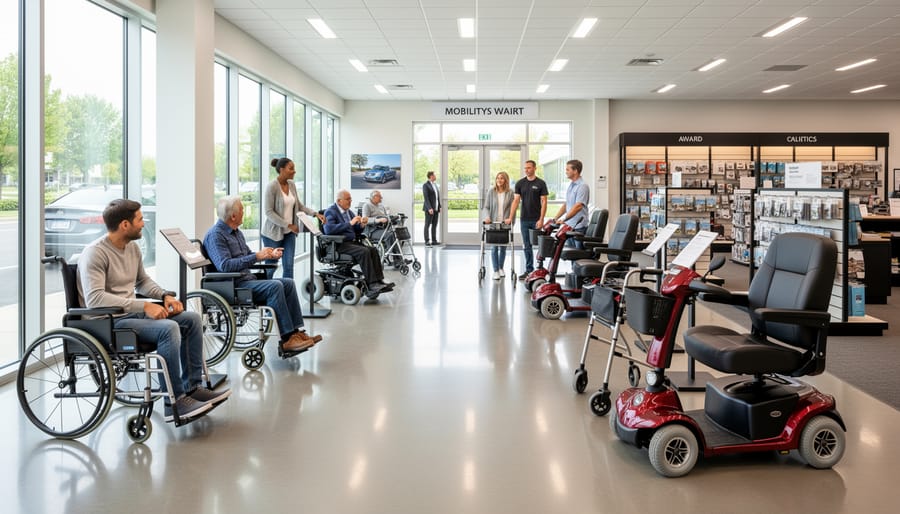
1. Mobility Scooters: Freedom for Longer Distances

Mobility scooters open up the world for individuals who struggle with longer distances but retain enough upper-body strength and balance to operate a motorized device. Unlike wheelchairs, scooters let you sit upright on a seat and steer with handlebars, making them ideal for errands, outdoor activities, and navigating Calgary’s sprawling shopping centers or parks when walking isn’t feasible.
The key decision is whether you need a travel scooter or a full-size model. Travel scooters break down into portable pieces that fit in a car trunk, perfect for those who drive themselves or rely on family transport. The Gs100 from Amylior, available at Calgary providers like Assist Health Supplies, exemplifies this category: lightweight, compact, and designed for smooth indoor surfaces and paved outdoor paths. Full-size scooters, by contrast, offer larger batteries for extended range, beefier tires for rougher terrain, and more robust suspension to handle Calgary’s potholed streets and uneven sidewalks. If you plan to use your scooter year-round outdoors, prioritize models with higher ground clearance and all-terrain capabilities.
Testing matters because comfort and maneuverability vary wildly. Can you reach the controls easily? Does the seat support your back for the duration you’ll be riding? Will it turn sharply enough for your home’s hallways or your favorite grocery store aisles? A scooter that feels perfect in a showroom might prove exhausting or impractical after an hour of real use. Renting first lets you discover these realities before spending thousands, and it gives you time to build confidence operating the controls in Calgary traffic and weather conditions.
2. Wheelchairs: Manual and Power Options for Daily Living
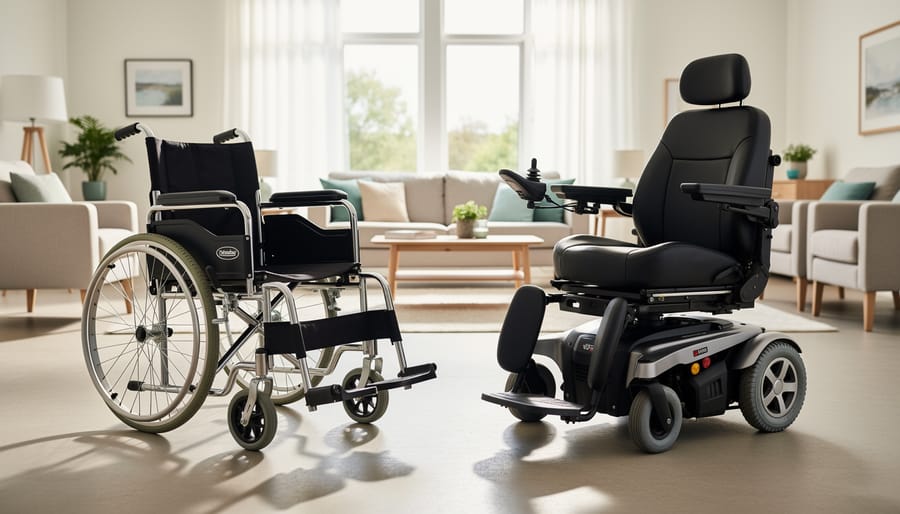
Wheelchairs remain among the most versatile mobility aids for individuals who cannot walk or need significant support for daily activities. Calgary providers stock both manual and power options, each suited to different needs and lifestyles.
Manual wheelchairs come in two primary configurations. Transport chairs are lightweight, compact models with small wheels designed for caregivers to push. They fold easily for car storage but require someone else to propel them. Self-propelled wheelchairs feature larger rear wheels with hand rims, allowing users to move independently. These models require upper-body strength but offer greater autonomy for those who can manage them.
Power wheelchairs use electric motors and joystick controls, making them ideal for individuals with limited upper-body strength or those who need to travel longer distances. They’re heavier and more expensive than manual options but eliminate physical strain and expand range.
Selecting the right wheelchair requires attention to several practical factors. Seat width must accommodate your body comfortably while fitting through standard doorways, typically 32 inches in most Calgary homes. Weight capacity varies significantly between models, so verify the chair can support your needs safely. Indoor maneuverability matters for navigating tight spaces like bathrooms and hallways; compact turning radius becomes critical in smaller apartments.
Calgary’s outdoor terrain and winter conditions demand consideration too. Standard manual wheelchairs struggle on snow and ice, while power chairs with larger wheels and higher ground clearance handle uneven sidewalks and curb cuts more effectively. If you plan outdoor use through Calgary’s six-month winter, discuss tire options and weather-resistant features with your provider.
Most wheelchairs benefit from professional fitting. Seat height, footrest position, and armrest adjustments affect both comfort and proper body alignment, reducing the risk of pressure sores or strain during extended use.
3. Walkers and Rollators: Support for Steady Mobility
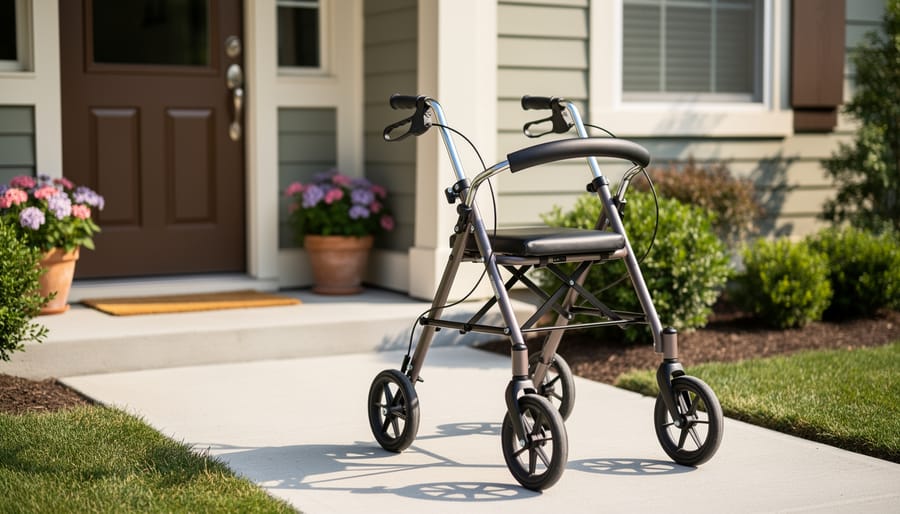
Walkers and rollators bridge the gap between canes and wheelchairs, offering stability for those who need more support than a single walking stick provides but can still bear weight on their legs. The right choice depends on your balance, endurance, and whether you need a rest option during longer outings.
Standard walkers provide maximum stability. You lift the entire frame with each step, which works well for individuals recovering from surgery or those with significant balance challenges. They’re sturdy but require upper-body strength and don’t roll, making them best for short distances indoors. Folding models collapse for storage or transport, though they sacrifice some stability for portability.
Two-wheeled walkers add front wheels to a standard frame, letting you push rather than lift. This reduces fatigue while maintaining rear stability through fixed back legs. They’re popular for home use where you need secure support but want easier movement between rooms.
Rollators are fully wheeled and include hand brakes, a built-in seat, and often a storage basket. Three-wheeled models turn tightly in narrow spaces like apartment hallways, while four-wheeled versions handle outdoor terrain better, including Calgary’s uneven sidewalks and weather transitions. The seat matters for anyone who tires easily. You can rest without finding a bench, which transforms grocery shopping or medical appointments from exhausting ordeals into manageable outings.
Height adjustment is critical regardless of type. Your elbows should bend at roughly 15 degrees when gripping the handles, and your wrists should align with the grips when standing naturally. Too high or too low causes shoulder strain and poor posture. Most models adjust in one-inch increments.
Hand brakes on rollators need checking regularly. Worn brake pads reduce stopping power, particularly risky on icy surfaces during Calgary winters. Storage baskets free your hands and eliminate the unsafe practice of hanging bags from the frame, which can tip the walker backward.
4. Knee Scooters: Injury Recovery Without Crutches
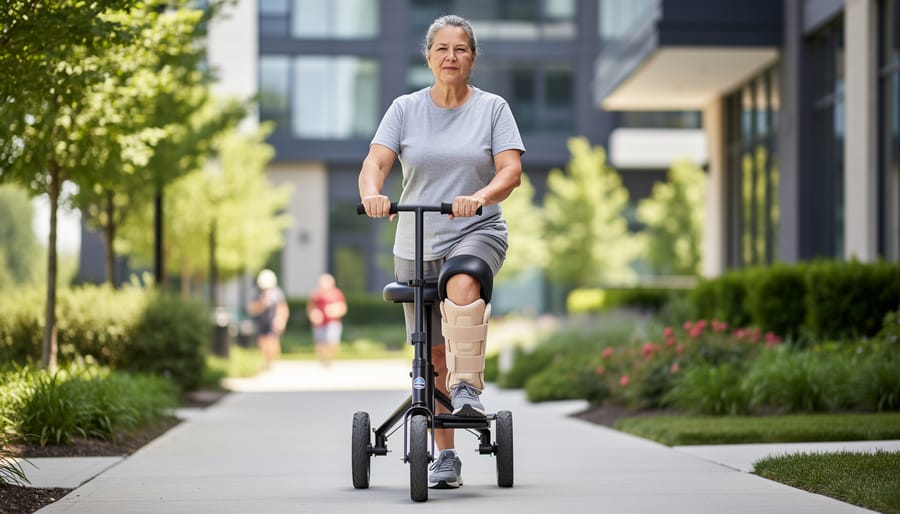
Knee scooters offer a practical alternative to crutches when you’re recovering from foot surgery, ankle injuries, or lower-leg conditions that prevent weight-bearing. Also called knee walkers, these four-wheeled devices let you rest your injured leg on a padded platform while using your other leg to propel yourself forward, keeping both hands free for balance or carrying items.
The appeal is straightforward: they’re less exhausting than crutches and reduce strain on your shoulders, wrists, and underarms. Many surgeons specifically recommended after foot surgery because they maintain mobility without compromising the healing process. You can steer using handlebars, and most models include hand brakes similar to bicycle brakes, giving you control over speed and stops.
Knee scooters work best on flat, smooth surfaces like indoor hallways and sidewalks, though some heavy-duty models handle outdoor terrain. They’re compact enough for navigating home spaces, yet stable enough for trips to appointments or errands. The knee platform adjusts to your height, and many fold for transport in a vehicle.
For temporary disabilities, renting a knee scooter often makes more financial sense than purchasing. Calgary providers can guide you through options that match your recovery timeline and living environment, ensuring you maintain independence while your injury heals.
5. Canes: Simple Support for Balance and Stability
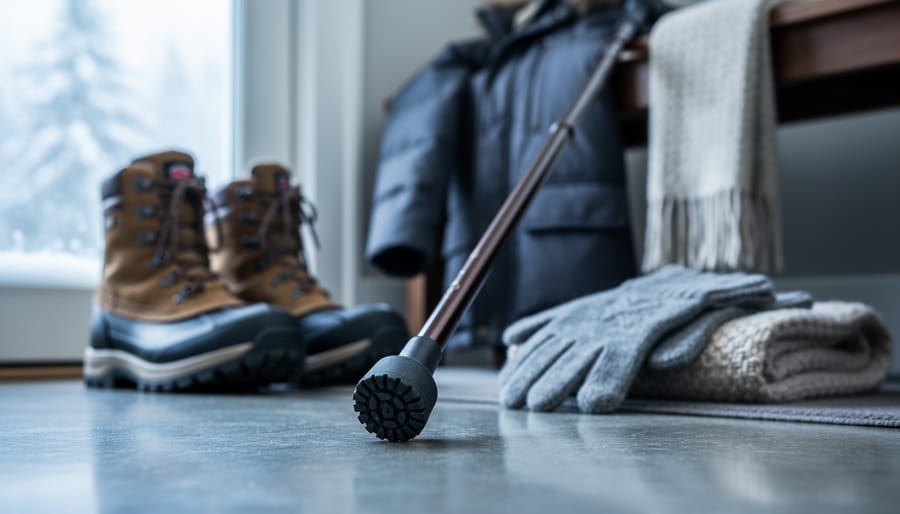
Canes remain one of the most accessible mobility aids for individuals who need light support with balance and stability. A single-point cane works well if you have good upper-body strength and need minimal assistance, while a quad cane with its four-point base provides significantly more stability for those recovering from stroke, managing phantom limb pain after amputation, or dealing with balance issues.
Offset-handle canes position your weight directly over the shaft for better support and reduced wrist strain compared to traditional curved handles. If you’re frequently on the go, folding canes collapse into compact sizes that fit easily into a bag or attach to a wheelchair.
Proper fitting matters more than most people realize. Stand naturally with your arm at your side, the cane’s top should align with the crease of your wrist, creating about a 15-degree bend in your elbow when you hold it. Too short forces you to lean, too tall puts strain on your shoulder.
A cane works when you need help with balance on one side or mild weight relief. If you’re relying heavily on the cane to bear weight, struggling with stability on both sides, or frequently feeling unsteady, a walker or rollator offers safer support.
Calgary’s winter conditions demand attention to one critical detail: rubber tips. Replace worn tips immediately as smooth rubber on ice creates serious fall risk. Some locals switch to ice-gripper attachments with small metal teeth during winter months for better traction on icy sidewalks.
6. Crutches: Temporary Mobility After Injury
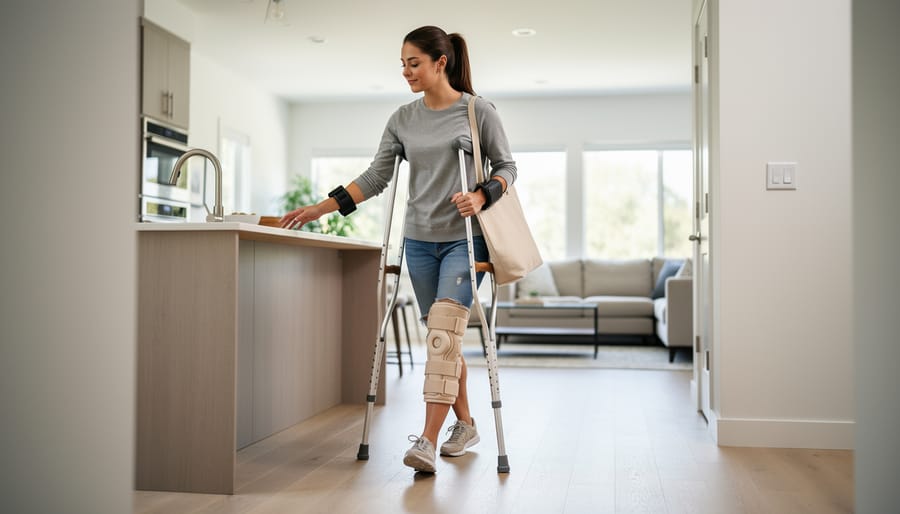
Crutches remain one of the most prescribed mobility aids for temporary injuries, particularly after ankle sprains, foot surgeries, or lower-leg fractures. They’re designed to keep weight off one leg while you heal, but choosing the right type and ensuring proper fit makes the difference between safe recovery and potential complications.
Axillary crutches, the familiar underarm style, work well for short-term use and require good upper-body strength. The key fitting detail: the crutch pad should sit two to three finger-widths below your armpit, never pressing directly against it. Leaning your weight on the pad can compress the radial nerve, causing temporary numbness or weakness in your hands. Your weight should rest on your hands through the grips, with your elbows bent at about 15 degrees.
Forearm crutches, also called Lofstrand crutches, feature a cuff that wraps around your forearm just below the elbow. They’re lighter and offer better maneuverability than axillary models, making them popular for longer recovery periods or individuals who need ongoing support. They require more balance and coordination but free up your hands more easily for tasks like opening doors.
For those who can’t bear weight on their hands or wrists due to arthritis, carpal tunnel, or other conditions, platform crutches provide an alternative. These feature a horizontal platform that supports your forearm, transferring weight to your elbow instead.
Recovery from injury or surgery involves more than just the right mobility aid. Maintaining proper nutrition supports healing and helps you regain strength faster, making your return to full mobility smoother.
7. Transfer and Positioning Aids: Safety for Daily Transitions

Transfer and positioning aids don’t move you from place to place, but they make the movements you do every day safer and more manageable. For individuals with limb loss or limited upper-body strength, these tools reduce fall risk and physical strain during transitions between wheelchair and bed, toilet, car, or bathing areas.
Transfer boards, sometimes called slide boards, create a smooth bridge between two surfaces. You place one end on your wheelchair seat and the other on the destination, then slide across rather than standing and pivoting. They’re particularly valuable for those with lower-limb amputations who can’t bear weight on both legs.
Pivot discs and transfer turntables let you rotate your body without lifting your feet, reducing twisting strain on joints and lowering fall risk. Caregivers often use these when helping someone move from wheelchair to car seat.
Patient lifts, including ceiling-mounted and portable floor models, handle the heavy work when independent transfers aren’t possible. They protect both the individual being moved and the caregiver from injury. Sling-style lifts distribute weight evenly and accommodate different body types.
Grab bars installed near toilets, bathtubs, and entryways provide stable anchor points. In Calgary’s climate, they’re essential in icy winter conditions when balance becomes even more precarious. Look for bars rated for your weight and installed into wall studs, not just drywall.
These aids work best when properly fitted and positioned for your specific needs. An occupational therapist can assess your home and recommend the right combination of transfer equipment for your daily routines.
Finding the Right Mobility Aid in Calgary
Start your search by visiting a local provider for an in-person assessment. Assist Health Supplies’ Calgary location at 627 Manitou Rd SE offers hands-on trials of mobility equipment, letting you test scooters, wheelchairs, walkers, and other aids in a real-world setting before committing. This tactile experience reveals comfort issues, maneuverability limitations, and fit problems you can’t spot in online photos.
When you visit, ask specific questions: Does this model qualify for my insurance plan? What’s included in the rental rate, and how does the rental-to-purchase program work? Can I exchange if my needs change? Bring any prescriptions or medical documentation from your healthcare provider, as some equipment requires professional authorization for funding or insurance approval. Your occupational therapist or physiotherapist can often recommend specific features based on your mobility limitations and daily routines.
Work closely with your medical team throughout the selection process. They understand your physical capabilities, recovery trajectory, and long-term needs better than sales staff. If you’re navigating funding sources like Alberta Aids to Daily Living or private insurance, be prepared for paperwork and approval timelines. Claiming insurance for mobility aids can involve detailed documentation, so keep all receipts, prescriptions, and assessment reports organized from the start.
Rental vs. Purchase: Making the Smart Choice
Choosing between renting and purchasing a mobility aid depends on how long you’ll need it and your budget. For temporary situations like recovering from surgery or a broken ankle, renting makes financial sense. You avoid the upfront cost of equipment you’ll only use for a few weeks or months. Rental also lets you test different models to find what works best before committing to a purchase.
If you need a mobility aid long-term, purchasing becomes more economical after the first few months. However, many Calgary residents benefit from rental-to-purchase programs that bridge both options. For example, Assist Health Supplies offers a “Try Before You Buy!” program for mobility scooters where your rental costs get deducted from the purchase price if you decide to keep the equipment. This approach eliminates buyer’s remorse and ensures you’re investing in the right aid.
Insurance coverage varies significantly. Some extended health plans cover rentals for short-term medical needs, while others contribute toward purchases with a doctor’s prescription. Check with your insurer about coverage limits, required documentation, and whether they distinguish between rental and purchase reimbursements. Provincial programs may also provide funding for qualifying individuals with long-term mobility needs.
The smartest approach? Start with a rental to experience the equipment in your daily environment, then make an informed purchase decision based on real-world use.
Frequently Asked Questions
How do I know which mobility aid I need?
The best approach is to consult with your healthcare provider, who can assess your specific mobility challenges, strength, and balance needs. Many Calgary providers also offer in-person assessments to help match you with the right equipment based on your daily activities and living environment.
Can I rent mobility aids in Calgary?
Yes, several Calgary providers offer rental options for mobility aids. Assist Health Supplies provides a “Try Before You Buy” program for equipment like the Gs100 travel scooter, with rental costs deducted from the purchase price if you decide to buy.
Does insurance cover mobility aids?
Coverage varies by insurance plan and the type of mobility aid prescribed. Many private insurance plans and government programs provide partial or full coverage when mobility aids are deemed medically necessary, so check with your provider and ask for documentation from your healthcare professional.
What’s the advantage of trying before buying?
Testing a mobility aid in your actual environment helps ensure it fits your lifestyle, navigates your home and neighborhood effectively, and meets your comfort needs. This trial period can prevent costly mistakes and helps you feel confident in your investment.
How do I get fitted properly for a mobility aid?
Proper fitting requires professional assessment of your height, weight, arm length, and mobility patterns. Visit a local provider like Assist Health Supplies at 627 Manitou Rd SE or call (587) 353-4325 to schedule a fitting appointment where trained staff can adjust equipment to your specific measurements.
Getting answers to these common questions before visiting a provider can streamline your experience and help you advocate for the mobility solution that best supports your independence. Don’t hesitate to ask detailed questions about features, warranties, and ongoing support when exploring your options.
Calgary’s range of mobility aids means you have genuine options for reclaiming independence, whether you’re recovering from surgery, managing a long-term condition, or adapting to limb loss. From mobility scooters and power wheelchairs to simple canes and transfer aids, the right equipment transforms daily living from a struggle into something manageable.
Start with an in-person assessment. Visit providers like Assist Health Supplies at 627 Manitou Rd SE, where staff can evaluate your needs and let you test equipment before committing. Take advantage of rental programs that let you try aids at home, in your environment, where you’ll actually use them. These trial periods reveal what works and what doesn’t, saving you from costly mistakes and ensuring your investment genuinely supports your lifestyle.
The mobility aid that fits your needs exists. It might take testing a few options to find it, but that first step toward greater mobility is worth taking. You deserve equipment that works for you, not against you, and Calgary’s local providers are ready to help you find exactly that.