
The best mobility aid for a senior is the one that fits the person: their balance, strength, home layout, outdoor routines, and the support they have from family or caregivers. A cane suits someone who needs a light steadying touch. A walker or rollator with a seat gives more stability and a place to rest. A wheelchair, transport chair, or scooter makes sense when distance, not just balance, is the challenge. Transfer aids and home safety equipment round out the picture, because independence often hinges on getting out of a chair or bath safely.
Choosing well matters. The right aid can protect independence, keep people connected to the places and people they love, and make daily life easier for everyone involved. The wrong one sits unused in a hallway.
This guide helps you compare the main types side by side, weigh the factors that count, and match options to real situations. We’ll also look at funding, including how Medicaid can cover mobility aids, often at little to no cost, though coverage varies by state, and how Canada’s Exchangeable and Adaptive Features (EAF) program supports accessibility projects in communities. Eligibility details and warranty or return policies differ, so confirm those with your provider before you buy. Talk with a doctor or therapist too. Their guidance should shape the final choice.
Signs It May Be Time to Consider a Mobility Aid
Plenty of people reach for a mobility aid well before a serious fall. Noticing small changes in how you move is not a sign of weakness. It’s useful information, and acting on it early keeps you in charge of your routine.
Here are some everyday signs that extra support or stability may help:
- You feel unsteady on stairs, curbs, or uneven ground.
- You find yourself holding onto furniture, walls, or countertops to get around the house.
- Short outings leave you more tired than they used to.
- You’ve had a near-fall or a stumble that rattled your confidence.
- You’ve started skipping gatherings, walks, or errands because getting there feels like too much.
If one or two of these sound familiar, that doesn’t mean your independence is slipping away. It often means the right tool could help you keep doing the things you enjoy. Walking aids like canes and walkers can improve quality of life, and the right fit can build confidence while lowering the risk of falls and further injury.
A smart first step is a conversation with your doctor or a physical or occupational therapist. They can look at your balance, strength, and daily routine, then point you toward what actually suits you. Think of it as getting a clearer picture before you choose, rather than guessing. Bringing a family member or caregiver along can help, too, since they often notice things you might overlook.
Key Buying Factors: How to Match an Aid to Your Needs

Balance, Strength, and Fit
How steady you feel on your feet is the best place to start. If you wobble when turning or standing up, a walker or rollator usually offers more support than a cane, because it gives you a wider base to lean on. A cane suits mild unsteadiness and works best when you have enough strength in your hand, wrist, and shoulder to take real weight through it.
Upper-body strength matters too. Pushing a walker or steering a rollator takes more arm power than many people expect. Building that strength gradually with simple home exercise tools guided by your therapist, can make daily use easier.
Fit is just as important. When you stand relaxed, the handle should sit about level with your wrist crease, leaving a slight bend in your elbow. A grip that’s too high or too low strains your shoulders and back, and it can throw off your balance. Choose handles that feel comfortable and secure, and ask a clinician to check the height before you rely on the aid.
Your Home, Your Routine, and Your Support Network
Think about the spaces you move through every day. Measure your doorways and hallways, since a rollator or wheelchair needs more clearance than a cane. Notice stairs, thresholds, and flooring too. Thick rugs can catch wheels or feet, while smooth, uncluttered floors make most aids easier to handle.
Then picture your routine. If you head outdoors often, look at how an aid handles curbs, grass, or uneven paths. If you travel, ask whether it folds and fits in your car. Storage matters as well, so check that there’s a convenient spot near the door.
Finally, be honest about support. A caregiver may need to lift, fold, or load an aid into a vehicle, so a lighter, simpler design can make their role easier. Try the aid with that helper present before you decide.
Mobility Aid Types Compared: Canes, Walkers, Rollators, Wheelchairs, Scooters, and More
Walking Supports: Canes, Walkers, and Rollators

Canes, walkers, and rollators each fit a different level of need, so it helps to match the aid to how much support you actually want.
A cane suits people who need light balance support and can still bear most of their own weight. A standard walker offers a wider, steadier base and more weight-bearing help, which many people find reassuring on stairs-free routes at home. A rollator rolls on wheels, so it keeps a smoother, more natural pace, and models with a seat let you stop and rest when a walk gets tiring, which can make outings feel more possible. If you’re comparing options locally, our guide to mobility aids in Calgary is a helpful place to start.
Some people find walkers a bit awkward to maneuver at first, so try before you commit.
Seated and Powered Options: Wheelchairs, Transport Chairs, and Scooters
When walking becomes tiring or unsafe over longer distances, seated options can keep you active and involved. A self-propelled wheelchair lets you stay in control of your own movement, though it takes upper-body strength and stamina. A transport chair is pushed by a companion, which makes it a good fit for outings where a caregiver is along to help with distance or uneven stretches. Powered options, like scooters, reduce physical effort and can suit people with lower stamina who want to cover more ground on their own.
Each has trade-offs. Some people find scooters bulky to steer in tight spaces, and transport chairs depend on someone else to push. For a single illustrative price point, one fold-and-travel four-wheel powered scooter was listed at $1,245.00 on . That is an example only, not a typical price or a recommendation. Try an option in person, and ask a therapist to help match it to your needs.
Transfer Aids and Home Safety Equipment
Getting in and out of a bed, chair, or bathtub is often where a primary aid like a cane or walker stops helping. That’s where transfer aids and home safety equipment come in. Think grab bars, raised toilet seats, shower chairs, bed rails, and sturdy handholds that give you something solid to push or pull against. They’re a quiet but meaningful piece of the broader world of assistive technology. Pairing them with a walker or rollator can make every room in the house feel more manageable. An occupational therapist can help you decide which ones fit your space and routine.
Recommendations: Which Aid Fits Which Situation
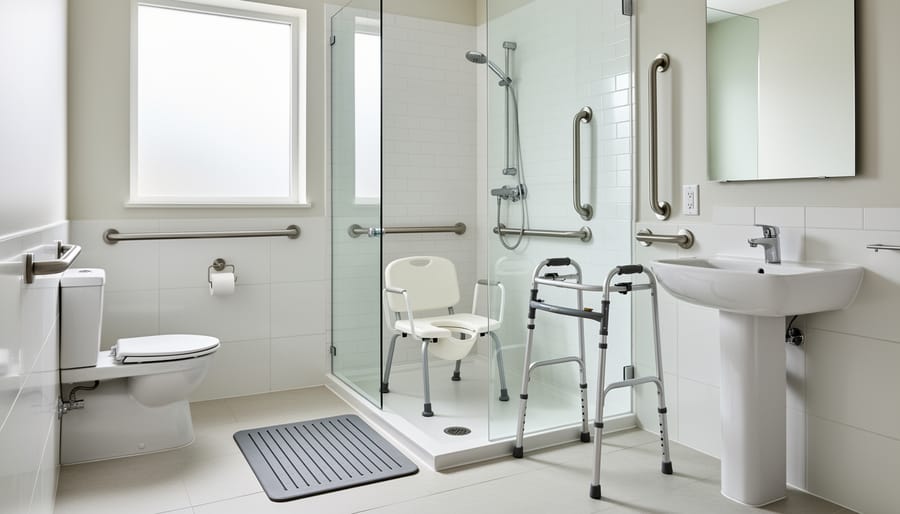
Every situation is a little different, so think of these pairings as starting points for a conversation with a doctor or physical or occupational therapist, not as final answers. A clinician can watch how you move and tell you what truly fits.
- If you feel a little unsteady on uneven ground or stairs, consider a cane for light balance support, and ask a therapist to check the height and grip.
- If you need more stability while walking and can bear some weight through your arms, consider a walker.
- If you need rest breaks on outings, consider a rollator with a seat so you can pause wherever you are.
- If longer distances leave you drained, consider a transport chair for companion-pushed trips or a powered scooter for covering ground on your own.
- If you need hands-on help from a caregiver, consider a wheelchair or transport chair, plus transfer aids for beds, chairs, and bathrooms.
- If getting up from seats or into the bathroom is the hardest part, consider home safety equipment and transfer aids alongside your main aid.
Notice that many people end up using more than one tool. You might lean on a cane around the house, bring a rollator for the neighbourhood, and use a scooter or transport chair for bigger days out. That kind of mix is common and sensible, and it helps you save your energy for what you enjoy.
Walkers, rollators, canes, wheelchairs, transport chairs, scooters, transfer aids, and home safety equipment can all support independence. What matters is the match between the aid, your balance and strength, your home, and the support you have around you. If you’re helping a loved one choose, include them in the decision, since an aid they’re comfortable with is one they’ll actually use.
Trying an aid in person before you commit, ideally with a clinician nearby, will tell you more than any product description can.
Paying for Mobility Aids: Coverage and Funding Options
Many families are surprised to learn that help with costs may exist. In the United States, Medicaid can cover mobility aids, often at little to no cost. Coverage varies by state, but it often includes walkers, wheelchairs, and scooters. Because the details differ from place to place, it’s worth asking your state Medicaid office what applies to your situation before you buy anything out of pocket.
North of the border, the Exchangeable and Adaptive Features (EAF) program supports community-based projects across Canada that improve accessibility, remove barriers, and enable Canadians to participate more fully in their communities. The EAF program improves accessibility by funding projects rather than purchases for individuals, so it’s best understood as a community resource that can make everyday spaces easier to move through.
Eligibility criteria are not something this guide can spell out for you, and neither can we promise specific warranty or return terms. Those details depend on the program, the provider, and the product, so confirm them directly at the source. If you’ve dealt with the paperwork side of things, you may already know the frustrations of claiming insurance which is a good reason to ask questions early and keep records of every conversation.
A little homework up front can save real money and stress, and it helps make sure the aid you choose is one you can actually use and rely on.
Common Mistakes to Avoid When Choosing a Mobility Aid

Choosing a mobility aid is a big decision, and a few common missteps are easy to sidestep once you know them. None of these reflect poorly on anyone; they’re simply things many people learn the hard way.
Buying without a professional assessment is the most common one. A doctor or physical or occupational therapist can match an aid to your balance and strength, which saves you from buying the wrong thing twice.
Choosing by price or looks alone can backfire too. A sleek design or a bargain means little if the aid doesn’t suit how you actually move.
Ignoring your home layout is another trap. Narrow doorways, stairs, and thick rugs can make an otherwise good aid frustrating to use indoors.
Skipping fit adjustments matters more than people expect. Handle height and grip affect comfort and safety, so take the time to set them properly.
Overlooking storage and transport catches many families off guard. Think about where the aid will live and who will lift or fold it for the car.
Waiting too long out of pride is understandable, but a mobility aid is a tool that supports confidence and independence, and earlier support can help you stay active.
Finally, try before you commit. Testing an aid in person shows you whether it feels steady, manageable, and right for your daily routine.
Frequently Asked Questions About Mobility Aids for Seniors
How do I know which mobility aid is right for me?
The right aid matches your balance, strength, home layout, outdoor needs, and the support you have from caregivers. Trying options in person and getting guidance from a doctor or therapist will help you land on a comfortable, safe fit.
What is the difference between a walker and a rollator?
A standard walker is typically lifted or pushed forward to give steady, weight-bearing support. A rollator rolls on wheels and often includes a seat, which can be handy for rest breaks on longer outings.
Does Medicaid cover mobility aids?
Medicaid can cover mobility aids, often at little to no cost. Coverage varies by state and often includes walkers, wheelchairs, and scooters, so check directly with your state program or provider for the details that apply to you.
Should I talk to a doctor before choosing a mobility aid?
Yes, it’s a smart first step. A doctor or a physical or occupational therapist can assess your needs, recommend the right type, and help make sure the aid is fitted properly.
Can using a mobility aid make you weaker? When it’s well chosen and properly fitted, an aid is meant to support your movement, not replace it. It can help you stay active and steady, and a therapist can advise you on how to use it in a way that supports your strength and confidence.
The right mobility aid does more than help you get from place to place. It supports your independence, your safety, and your confidence in everyday life. Before you decide, talk with a doctor or physical or occupational therapist, and try options in person so you can feel how each one handles. If you want hands-on guidance, assistive tech services can be a good starting point. And we’d love to hear from you: what aid has worked for you or someone you care for? Share your experience, and help others in our community choose with confidence.